Translate

Friday, October 4, 2013

Short Test - 2013 Audi S4


"Wow! That was oversteer!"

Just counter-steered and, foot to the floor, heading to the next corner.
 
"Oversteer?"

Corner's coming up! Tap the brakes!
 
"Yeah, pitch it into a corner like this, then nail the throttle at the apex and you can make the rear end step out."

Turn steering right, feel all wheel drive grip, nose pushes slightly mid-corner, floor it, tail swings left.

"Holy....."

We were approaching another tight right hand corner at an alarming rate and in my periphery, I could make out my passenger's tense grip on the oh-sh*t handles. Stomping on the brakes, the 2013 Audi S4 easily shrugged off  the excess speed with little drama and filled the cabin with quite audible pops from the exhaust as the 7-speed Audi S-tronic dual clutch transmission blipped the throttle and initiated rapid-fire downshifts. Once mid-corner, full throttle application was followed by the sophisticated Quattro all wheel drive system shunting torque to the outside rear wheel, inducing oversteer to counter the S4's inherent nose-heavy design. A bit too much I thought. Backing off the power a tad and applying a smidge of countersteer, the S4 righted itself instantly and flung us towards the next bend. I managed a glance over at my wide-eyed and now slightly pale co-pilot.

"Whoa...."

He was now witness to just a peek of what his car can do. The 2013 Audi S4 is not only the most expensive variant of the A4 line (until Audi decides to import the stupid-fast RS4 that is), it is perhaps the best Q-ship impersonation Audi has come up with to date. The S4 manages to straddle the line between executive cruiser and corner stormer with relative ease while being as innocuous and unsuspecting as a regular A4, except to those in the know. That is the character of the S-line of Audi's cars and they form a bridge between regular variants and the M/AMG hunting RS models. Call it the Goldilocks-zone if you prefer.


You'd have to look really hard to spot the S4 out in the open. The now classic Audi grille is front and center but features dark metallic accents on the slats that, along with the LED daytime running lights, exude a slightly meaner look. Subtle badges and other stealth touches such as the quad exhaust pipes peeking under the rear valance, slightly larger front intakes and deeper sill extensions coupled with a 1.2 inch lower ride height and brushed metallic mirror caps hint of the assassin nature of this A4. Then there's the 'V6T' badges on the front fenders which will confuse anyone not familiar with Audi's engine nomenclature. Under the S4's broad hood sits a 3.0 liter supercharged (not turbocharged) and direct-injected, 24 valve, DOHC V6, spitting out an underrated 333hp and 325lb-ft of torque. That torque is available over a broad rpm spread from as low as 2900rpm all the way to a 5300rpm peak.and isrouted through either a standard 6-speed manual or the above-mentioned optional 7-speed dual clutch transmission. Audi's Quattro all wheel drive system puts the power to the road and, in my Prestige tester, is able to direct torque between the rear wheels through a sport differential when cornering to cancel out understeer and give the S4 a more neutral attitude. My tester was also fully kitted out with the 19" wheel option and 255/35 summer tires as well as an adaptive suspension that is managed by Audi Drive Select through the Multi Media Interface (MMI).


Four modes are available here. Dynamic mode stiffens the dampers, quickens throttle response, opens up the exhaust for wonderful pops and burbles, and increases weighting on the electronic steering. The 7-speed dual clutch transmission also quickens shifting in almost bolt-rifle fashion, holds gears to redline and blips the throttle on downshifts. Comfort mode dials everything back to a level that transforms the S4 into a docile machine doing its best undercover disguise. The suspension is still a tad firm but supple enough that bumps picked up by the aggressive wheel/tire package don't filter into the cabin and the 7 speed shifts imperceptibly and smoothly. Auto mode will monitor the driver's piloting and adjust the systems to suit his style accordingly while Individual allows the driver to mix and match the different system settings and store them for use. While most cars offer similar systems that aim to change their character, not many alter personality the way the S4 does. Switching from Comfort to Dynamic mode at speed, I could literally feel the car tightening up around me. The suspension got noticeably firmer, allowing the S4 to corner flatter while the sport differential did its best to keep the car neutral. The steering rack also quickened its ratio and went from fingertip-light to sports car heavy (although information from the road surface was pretty lacking) and the transmission went psychic, anticipating the next gear need while holding on to the selected gear to achieve the best Saturn V-like launch from corner exit. Seriously, the paddles on the steering wheel that allow manual control of the gearbox were superfluous. I tried them once, but the transmission was so well tuned to my driving that I never touched them again after. I'm a huge fan of manual transmissions and though a 6-speed manual is standard fare, I'd have to think long and hard about passing up on this excellent dual clutch transmission. It's that good.


Inside, the cabin is typical Audi-gorgeous, if a bit German-cold in ambiance. Sumptuous black leather and suede covered the seating areas and the dashboard was premium feeling to the touch. Everywhere the fingers went, the materials were rich and high quality. The flat-bottomed steering wheel was properly racy and the driver's dials featured highly visible gray faces with red accents. The seats were very supportive and heavily bolstered, holding me in place during some pretty violent maneuvering and, from other sources, were comfortable during long distance road trips. The S4 was also plenty roomy in the back, far roomier than it's predecessor and space was abundant enough for two people on long trips, though three might be a squeeze. The controls on the center console house the MMI interface and it was pretty straightforward in operation though some functions such as the radio settings are buried deep within sub-menus. A rotating knob between the front seats allows navigation through the various menus while hard buttons surrounding the knob offer quick selections of main functions on the large screen. The screen itself has clear graphics and, equipped with navigation, displays impressive Google Earth imagery. Standard features include Bluetooth wireless music streaming and voice calls, an excellent Bang and Olufsen 14 speaker, 505 watt sound system, HD radio and a WiFi hotspot capability.


Base price for the S4 is $48,000 but my Prestige tester starts at $54,000 ($55,400 with the dual clutch transmission factored in). With options such as adaptive suspension, 19" wheels, the Driver Assist package (which includes Dynamic steering and adaptive cruise control) and the sport differential, my tester topped out and just over $60k. Comparisons can be drawn with the BMW 335i xDrive, Mercedes C350 4Matic and Acura TL SH-AWD but in my opinion, the BMW is its closest competitor. I've yet to drive a 335i equipped with xDrive (and it's no less a rocket ship) but I've no doubt the S4 would best it or at least give it a bloody nose when given the beans. For the executive pilot who relishes the art of driving quickly while being swamped in luxury and remaining anonymous, the S4 suits rather nicely. 


Special thanks to Mr. Riaz Khan for helping to facilitate this review!

Friday, September 27, 2013

First Impressions - 2014 BMW M4


It's a bittersweet day M fans.

Rejoice for with the new F30 BMW 3 Series comes the promise of a M-ified version, only this time around (and for the rest of eternity) the vaunted M3 badge will only apply to the 4 door car. That's right. The arrival of the BMW 4 Series (no longer the 3 Series coupe) also means that the badge 'M4' will be affixed to the super coupe from BMW's M division.

Say what?

Let me explain. Exhibit A: Audi. Rather than make an A4 2 door (like they did with the A4 convertible...sorta), they branched off the 2 door version into the A5 (and with it, the S5 and hyper RS5) even though both cars share the same chassis. This has worked wonders for Audi and BMW is keen to follow suit. But is that such a bad thing though? The 3 Series Coupe has always been the stylish brother of the 3 Series lineup (which included 4 door and 5 door wagon variants) so in BMW's think tank, it made sense to branch off the 2 door into it's own line, sort of like the 6 Series is essentially a more stylish 2 door version of the 5 Series. Besides, with the arrival of new 3 Series variants like the Gran Turismo (see 5 Series GT for ugly reference) it was probably for the best.


So now, on to what makes this M4 so special (sounds weird saying M4 doesn't it?). Unlike the E90 M3, which sported a high revving 4.0L, 414hp V8, the new M4 will jump on the downsizing trend that has gripped the automotive world in the name of greater efficiency and, in a positive way, back to BMW's bread and butter engine configuration. In the V8's place will be a highly tuned version of BMW's legendary straight six coupled with two turbochargers and not related to the 335i/435i's N55 single turbo 3.0 liter (the M5's twin turbo 4.4 liter V8 is closely related to the same unit used in the 550i) or the earlier N54 powerplant. Displacing slightly more than 3.0 liters, power is rumored to be in the neighborhood of 420 to 450 horsepower with torque trouncing the paltry 295lb-ft of the naturally aspirated V8 by a significant margin. Figure closer to 400 lb-ft. The high-revving nature of the previous M3 will be retained, despite the forced induction employed by the new engine so look for a redline of around 7000-8000 rpm. BMW's 7-speed DCT dual-clutch transmission will send torque to the rear wheels (though a manual transmission is very likely) but don't expect BMW to follow Mercedes AMG on the AWD train. M engineers specify weight and balance as the primary reasons for turning their noses up at sending power to all four wheels, though the electronic M differential will have the ability for torque vectoring between the driven wheels. To keep the M4 light on its feet, BMW has employed more than a sprinkling or carbon fiber composites, particularly in the roof, trunk and hood with the emphasis on keeping the weight low and centralized. Bucking the bigger-is-porkier trend, the M4 will actually weigh less than it's predecessor by a good margin.


A look at the images reveals nothing less than something that came out of the M factory (toxic waste green hue aside). Signature cues include the large vents below the front bumper that provide cooling to the large carbon ceramic brakes as well as a carbon fiber front splitter for increased downforce. Unlike the bigger M5, these vents are more aggressive in design and feature multiple aerodynamic enhancements. The twin-kidney grille features unique inset slats and the traditional power dome in the hood. Just behind the front wheel wells, BMW has created functional fender vents it calls 'Air Breathers', beginning a character line that flows down the sides up to the widened rear hips. Large 20" wheels in typical M design are stuffed inside the wheel wells that, in tune with the widened hips, serve to enahnce the wider track of the rear end. The stylish character line ends in a rear unique to the M4, featuring a fully integrated tail spoiler and lower diffuser housing M's signature quad tailpipes finished in carbon fiber. Perhaps the coolest feature on the M4 concept is the roof which, also finished in carbon fiber, sports the just-visible M colors of blue, purple and red in stripes. The suspension has seen a thorough going over with wider tracks front and rear and a fully reworked rear suspension that features lightweight aluminum in the majority of its construction. Alas, the M4 will swap hydraulic steering for an electric unit, but before you take up flaming torches and pitchforks, the M engineers sweated the details to ensure that steering feel was not lost in the transition. The E92 M3's steering was a benchmark for feel and effort so look forward to the M4 to preserve that special touch in your hands.


Expect the production M4 and its four door companion to be unveiled in early 2014 with sales a few months after at a price starting in the $60k range. Like previous models, a convertible variant will follow (and here's hoping North America gets a wagon). With Audi RS and Mercedes AMG cranking out ever higher performance vehicles, the pressure is on BMW to deliver a car that will meet the Germans head on (and head off the new kid Cadillac ATS-V) keep the M badge as the standard bearer of the segment. Though calling the new car the M4 will take some getting used to, the performance being previewed should encourage M enthusiasts to accept the new car. And if the the new name still bothers you, there will always be an M3 available on the next stand. If you're willing to accept two more doors that is.

 Images courtesy of World Car Fans

Short Test - 2013 Volkswagen CC Sport Plus


When is a coupe not a coupe? Trick question? In a quest to answer a question no one asked, Mercedes Benz birthed the CLS by dressing a standard E-Class platform in a sleek and voluptuous wrapper, giving rise to the segment busting four-door coupe era. So successful was the CLS that many manufacturers jumped on the bandwagon, some going to the extreme of dressing crossover platforms to look like coupes (we see you BMW X6). To an accountant, it's a very easy and simple way to charge more money for what is, essentially, a pedestrian car. That Audi A7 you're got an eye on? That's the A6's more handsome (and expensive) brother. The BMW 6 Series Gran Coupe? A stretched 6 Series with two extra doors, itself sharing a platform with the 5 Series sedan. Volkswagen decided to try their hand in the form of the CC (or Comfort Coupe), introduced in 2009. Like the E-Class based CLS, the CC is basically a European market Passat in a fancier, swoopier suit. I was never really fooled by this but it can't be denied that styling does wonders to enhance a car's image. If a Passat seems too bland for your tastes, then maybe the CC, newly refreshed for 2013, warrants a closer inspection.


The CC has been quite a success for Volkswagen, selling in impressive numbers since its introduction. In order to keep the design fresh against newcomers, the CC underwent a nip-and-tuck treatment that sees the exterior styling get a good dose of edginess. While the basic outline remains the same, sharp creases now dominate the front end. A three bar chrome grille replaces the old one while LED daytime running lights highlight restyled bixenon headlamp bezels. Adaptive front lights are also available which swivel the beams into the direction the steering is turned for better illumination when cornering. The hood features two hard creases that run its length up from the outer grille edges to meet the A pillars. The sides also incorporate some sculpting with wider rocker panels and the rear end now has LED brake lighting that feature "CC" in their design. The Sport Plus' 18" wheels give the CC a good stance on the road and emphasizes the car's width. Where the old car was softer in appearance with a more organic styling that really stood out, the new styling gives the CC a dose of aggression while still maintaining an air of elegance and richness. It's not as at once identifiable as the old car but its stylish appeal is undeniable.


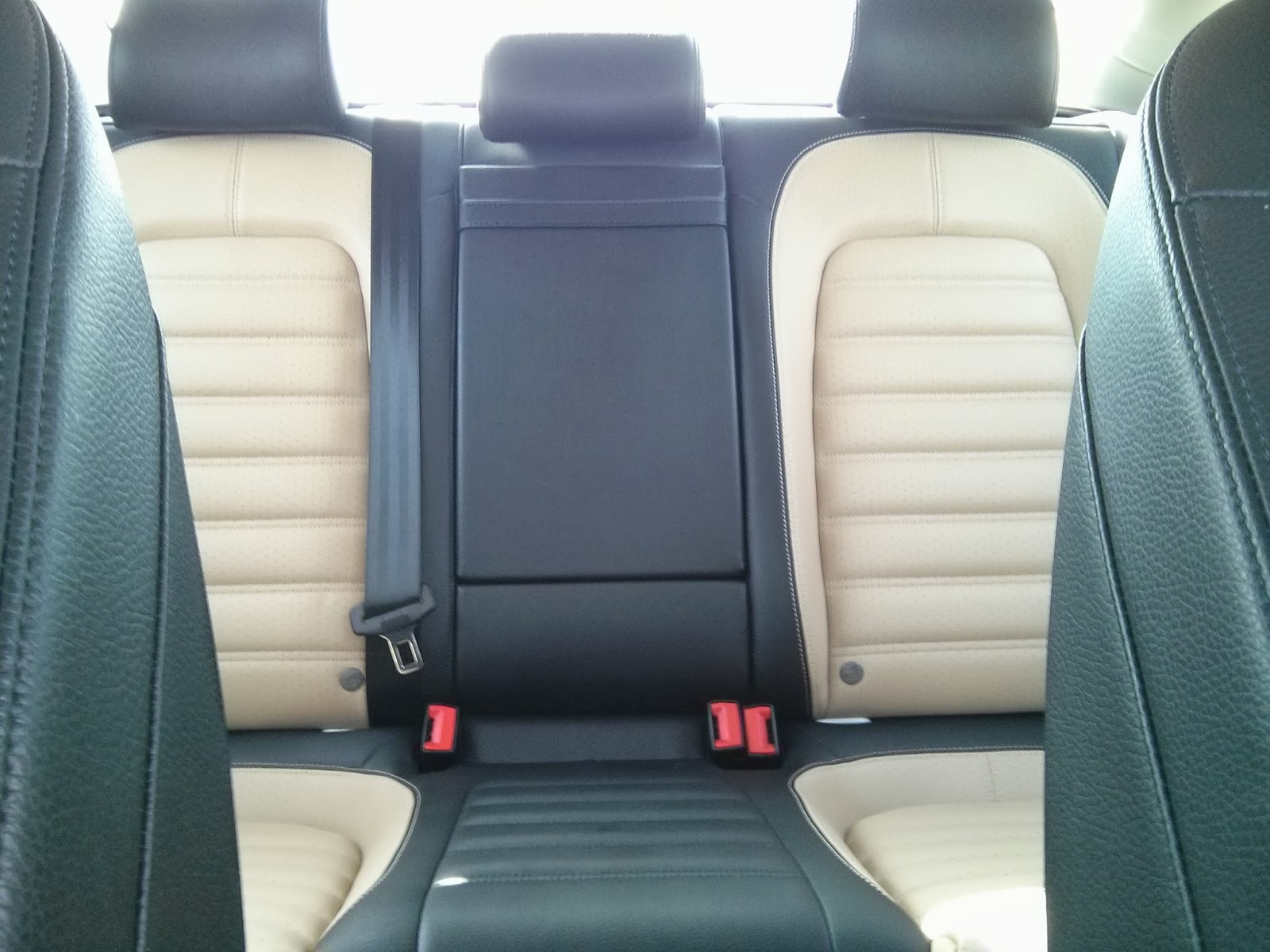
Inside, the premium air continues with typical high levels of German build quality, quite a step above the American-market Jetta and Passat. My 2.0T Sport Plus tester was decked out in a Desert Beige/Black leatherette material called V-Tex, a synthetic material said to be more durable than standard leather. Just tell your passengers it's leather and they won't know the difference. While most surfaces were buttery soft and premium feeling, some of the plastic aluminum accents felt a bit tinny and out of place in such a stylish cabin. The heated front seats are comfortable, supportive and power adjustable with good spacing for passengers. Rear accommodations are less so, befitting the CC's fashion-first mission. While leg space was just about adequate, my head touched the headliner and the amount of room wouldn't lend itself to comfortable three-abreast seating for anything above short trips. The seating position also places you low in the cabin with the window-line high up. Claustrophobia-prone passengers need not apply. Another thing regarding the rear seats: unlike the first-generation CC, the refreshed model now ditches the central rear divider for a slightly raised center seat, allowing a third passenger to ride.. The original two-place rear seating might have enhanced the look of the interior but many customers rejected the car because of the lack of a third seat. With this option, sales have picked up to the point where even the European CC now offers rear seating for three. However, even with this new feature, your three adult rear passengers will hate you after a road trip from Miami to Orlando. Small kids should be fine if they're not claustrophobic. Or you can just buy the Passat next door.


As the name suggests, Volkswagen's well regarded turbocharged 2.0 liter direct-injected four cylinder provides the motivation for this tester with output figures of 200hp and 207lb-ft of torque, channeled to the front wheels via a 6-speed DSG dual-clutch transmission. Now these figures might sound measly, but having driven a 2006 GTI so equipped, I wasn't in the least surprised at the ample power at hand. Where the 2.0T proved outright fun in the lighter Golf variant, in the CC it was more than adequate. Torque delivery is quite flat and readily available throughout the rev band, with just the slightest hint of turbo lag,  while shifts were typical-DSG smooth and imperceptible. At normal cruise, engine noise was kept mostly at bay with the only sound penetrating the interior being tire noise. While not deafening, it was noticeable enough but easily drowned out by the excellent 10-speaker sound system. Kick the spurs and the transmission will quickly ratchet down multiple gears to get the 2.0T in its sweet spot for almost instant forward thrust. Slip the selector into S mode and the transmission will hold gears all the way to redline, even anticipating a downshift when slowing for a corner. The driver can also take manual control via the gear lever, although for a car with the "Sport Plus" trim, paddle shifters are a curious omission. With a 0-60 time of just over 6 seconds, the 2.0T should satisfy the majority of customers.


While the CC is no sports car, it doesn't fall over itself when driven aggressively. Steering felt reasonably linear, losing some feel just off center. Ride quality when driven serenely is quite pleasant and solid, befitting its German roots. Despite the slightly stiffer suspension however, dive and roll when pitched hard into turns was substantial enough to tell most drivers to back off. The CC will change directions when asked as the steering is fairly responsive, but it prefers long sweeping turns as opposed to tight, twisty corners such as a racetrack  Don't feel like dialing it back? Terminal understeer will get your attention quite early when powering out of tight corners, spearing you into the weeds, even with the grip available from the larger tires (a summer option is available). I found a good technique when driving the CC aggressively was to carry speed into a corner, letting the chassis settle and allowing the tires to assist mid-corner. Once through with the nose more or less pointed straight, the throttle can be nailed and the mid-range torque of the turbo four can assert itself without understeer becoming an issue. Driven at 6/10s, the 2.0T provides enough thrust to keep the drive entertaining. Over that and the CC's Big Brother electronic nannies will quickly (and sometimes severely) slap your hand by aggressively cutting the engine and braking any slipping wheels. For the power-hungry, a 3.6 liter 280hpVR6 is available in uplevel models along with 4Motion AWD but the result would be a heavier and slightly more ponderous feeling (not to mention reduced gas mileage). Use the CC as a comfortable long distance cruiser and it will happily eat up the miles. Need more sport? VW has a GTI or Golf R with your name on it.


Pricing for the 2013 CC Sport Plus starts at $32,850 which includes the 18" wheels, RNS315 touchscreen with navigation, LED daytime running lights, Dynamic headlights with Adaptive Front Lighting and the good sounding 10 speaker audio system with Bluetooth phone/audio streaming while the DSG transmission replaces the base 6 speed manual. A fully loaded model with the VR6 and AWD will land somewhere in the mid $40k region. Audi territory. Choose your options wisely.


Competitors? Well there's the long-in-the-tooth Nissan Maxima, Ford Taurus, the new Chevy Impala and equally new Toyota Avalon as well as the Korean Hyundai Azera/Kia Cadenza duo. Another curious competitor to the CC could come from inside VW's own empire in the form of the Audi A4. While not as coupe-like as the CC (Audi has the pricier A7 for that role), the A4 does have a more premium nameplate and its base price sits at slightly less than $1000 more than the CC Sport Plus (although finding a base A4 with no options would be next to impossible). So is the Volkswagen CC worth the upcharge from the pedestrian Passat? If styling means more to you than practicality (really, isn't that why coupes are bought in the first place?) and a Mercedes CLS is out of reach, then Volkswagen has the car for you.


Many thanks to Mario for helping facilitate the review!

Thursday, April 25, 2013

First Impressions - 2014 Ferrari LaFerrari


What's in a name?

Rather than use a continuation of 'F' names like F70 or F150 (wait, scratch that last one) or even Enzo II, Ferrari's successor to the vaunted Enzo supercar goes by the name LaFerrari. As quoted by Ferrari Chairman Luca di Montezemolo on the car's unveiling at the Geneva Motor Show earlier this year, "[The LaFerrari] is the highest expression of excellence of our company: technological innovation, performance, futuristic style, driving pleasure. It is an extraordinary car, destined to our collectors. A car with technical solutions, which in the future will be integrated in our range and which are the benchmark for the entire sector. "LaFerrari" represents the best planning and building capacities in our Company, including those acquired in Formula One, knowledge, unique in the world."


Ok then.

Instead of debating how Ferrari could produce a car with even higher performance than the founder's namesake Enzo, let's just be glad that they did. No doubt progress has been made since the Enzo turned the world upside down with its record breaking performance numbers at the beginning of the last decade. That car served a direct link to Ferrari's longstanding Formula 1 effort and the styling echoed this. It wasn't pretty in the way the earlier F50 (or even the 360 Modena) was curvy but it's styling was purposeful and followed the "function over form" technique that Ferrari is a master of. LaFerrari builds on this but adds a hint of purposeful beauty in its lines. Where the Formula 1 link was obvious looking at the Enzo head-on, LaFerrari isn't so obvious, yet every curve and kink in its skin was designed and styled to move air in a very efficient way. The pointy front gives way to a series of active-aero elements sprinkled around the car that are computer actuated to respond to aerodynamic needs on the fly.  The whole looks-like-a-fighter-jet thing may be a bit overdone, but it is entirely appropriate here. Every vent, slat, wing and inlet does something to the airflow to either create downforce, direct it for cooling or make it retreat hastily from the body work. In fact, LaFerrari (which means "the Ferrari", go figure) runs in two modes: High Downforce or Low Downforce according to the driver's wishes.  Despite being the first product designed entirely in house (Pininfarina had nothing to do with its design), Ferrari can be proud of the fact that LaFerrari looks like a proper Prancing Horse. I think this will age as well as others that have come before it.


Enough with the exterior lines of the car, you may be saying, what powers this thing? Despite the ongoing transition to smaller powerplants in the name of increasing efficiency and lessening the amount of carbons in the atmosphere, Ferrari, like Lamborghini with its Aventador, has bucked the trend and stuck with an enhanced version of the V12 powering the F12 Berlinetta. Displacing the same 6.3 liters, LaFerrari's version is strengthened to the tune of 789hp at 9250 (!) rpm and 516lb-ft of torque at 6750 rpm. That's a good 59hp more than the F12 generates and this is due to a lighter crankshaft and variable length intake runners. Here's where the whole 'green' thing comes in. Ferrari is keen to acknowledge the need to be more environmentally conscious with its lineup and though they could've left the V12 alone and called it a day, they decided to blend its F1 racing technology with the V12 to create a 'mild' hybrid. But trust me, a Prius this ain't.


If you've ever watched F1 racing you may have heard the term 'KERS' being thrown around. KERS stands for Kinetic Energy Recovery System and consists of an onboard battery that captures kinetic energy from the intense braking heat generated by F1 race cars. This energy is then channeled back to the drivetrain  for an extra boost of power for a limited time. In LaFerrari, the system is called HY-KERS (the HY standing for HYbrid which LaFerrari is in essence) and operates in essentially the same way, except power is channeled through two electric motors (one to run the car's ancillary equipment, the other specifically for drive power) attached to a seven speed dual clutch transmission to the tune of 161hp. So the combined power rating for the drivetrain is an exceptionally heady 950hp and 660lb-ft of torque. This enough to power LaFerrari to a top speed of 217mph and a 0-60mph time of under 3 seconds (take that Bugatti).


When the time comes to haul down all that speed, massive carbon ceramic brakes measuring 15.7 inches in front and 15.0 inches at the rear can bring LaFerrari down from speed in a time that rivals the Bugatti Veyron (60mph-0 times under 100ft can be expected). Magnetic dampers are fitted at the four corners as are Pirelli P Zero tires and an E-diff to put the massive power to the pavement through the rear wheels.


Unlike more greener machines though (including McLaren's new P1), LaFerrari can't travel on electric power alone. The HY-KERS system acts like a turbocharger to enhance the V12's power at any given time and also helps it to run cleaner and more efficiently. Remember, this is still a hypercar so neutering it in the name of efficiency was not an option for Ferrari. Like a hypercar however, LaFerrari is extremely lightweight, construction consisting ot several types of carbon fiber sewn to make the tub and aluminum for the chassis and suspension. As a result, LaFerrari is expected to weigh in at less than 3000lbs with structural rigidity that bests the Enzo's by almost 30%. The cockpit is handsome in that same function over form way, the driver sitting behind a 12.3 inch multi-function screen and seats that, well, aren't really seats. They're more like padded forms molded out of the carbon fiber rear bulkhead and yes, they're molded to specification on order.


Not that you may ever get your chance. Production is limited to just 499 at an expected price of around USD1.2 million. So if you have the means, best phone up Maranello. Right. Now.


While the name may take some getting used to (Enzo certainly was when it debuted), LaFerrari is again expected to turn the world upside down, except it has competition from newcomer McLaren with its equally-hybrid P1, the new Lamborghini Veneno and the already-established Bugatti Veyron. Who ever said that cars of the future will only get lamer needs a check to the family jewels.


The future is now people.

Images courtesy of Ferrari

Thursday, February 21, 2013

Short Test - 2014 Mazda 6 Touring


Needless to say, I've been waiting a long time to see this car in the flesh, let alone drive it. Having seen pictures of the production 2014 Mazda 6 adhering so well to the original Takeri concept (read my First Impressions here), there was little doubt that it would drive as well as it looks. Mazda's stubborn (but faithful) attitude of building products for the buyer who relishes a curvy road is one that, in my opinion, makes the Japanese automaker distinguished from the other big time players. Sure Mazda's products don't sell in the same volume as Honda or Toyota, but Mazda's refusal to make their products generic means that they must be content to sit behind the segment leaders. However, with the introduction of Mazda's SkyActiv suite of gas-sipping technologies, the little Hiroshima-based company aims to appeal to current efficiency minded climate while still selling to the enthusiast driver.

But this time with a dash of style.

2014 Mazda 6 Touring (next to its daddy)


Since I've already covered the basics of 2014 Mazda 6's design, I'll be brief by saying that pictures don't do this car justice. The styling, while not in the four door coupe stance as the Hyundai Sonata, is equally as striking. The wheelbase is longer by just over an inch and, thanks to platform technology shared with the CX-5 crossover, the 6 is an especially light car. Some 300lbs easier on the scales than its predecessor depending on the trim level. The stance is dynamic and, at a glance, the proportions give a hint of RWD even though the 6 is strictly a FWD vehicle. The dash-to-axle ratio can be thanked for that as well as the minimal front/rear overhangs. With my first generation 6 sitting beside it, the differences are quite stark but in good ways. Whereas the 2002-2007 model looks quite sporty (especially with the spoiler attached), the 2014 6 still has an air of sportiness about it, but also a higher level of finesse and authority. The exterior lines have much more depth and intricacy rather than the smooth, round and simple design of the first generation. The size difference is also apparent, the newer car casting a larger shadow and wider stance compared to the older car.


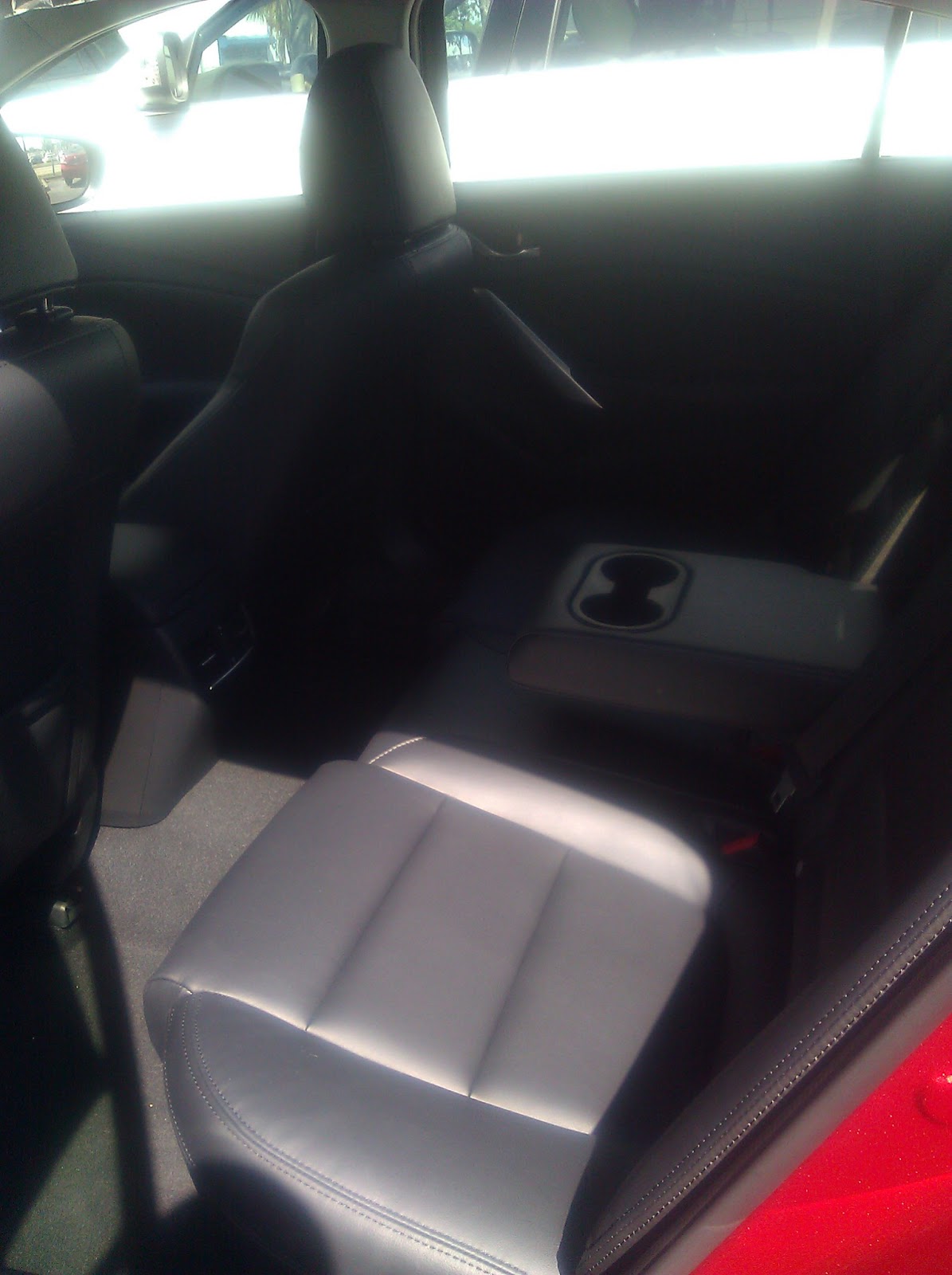
Getting inside, the interior features higher grade materials and great build quality. Compared to other sedans in the segment, the 2014 Mazda 6 dash appears simple and not as stylish (especially compared to the exterior) but the upside here is that all the controls are easy to reach and have a no-nonsense logic to manipulation (a great example being the three large knobs for the climate control system). The steering wheel is thick-rimmed and features EPAS (Electronic Power Assist Steering). Despite this there's no sense of vagueness, although just off center steering feel is a tad numb. The large gauges are legible and features a small display between the speedometer and tachometer for reference to vehicle information such as fuel mileage, range, radio info and maintenance logs. The cabin is quite roomy with rear seat space good for someone of my height (just under 6ft). Both cockpits of the older and newer 6 models share a common simplistic theme to the controls and driver-seating positions. Outfitted with leather, and high quality materials, you'd be fooled into thinking the 2014 Mazda 6 was a luxury vehicle at a glance. Indeed, everywhere the fingers are likely to roam, the materials are soft to the touch and and don't feel cheap or chintzy when operated.


Initially, all new Mazda 6 sedans will be powered by a 2.5L SkyActiv-G (for gasoline) four cylinder engine. Featuring an aluminum block with lightweight, low friction internals, direct fuel injection, variable valve timing and a sky (no pun) high compression ratio of 13.0:1, the engine generates 184hp and 185lb-ft of torque, useful gains over the smaller 2.0L version in the CX-5 crossover (which will also get the larger mill in mid 2013). Power is routed to the front wheels through two new SkyActiv automatic or manual transmissions, both equipped with six speeds. An optional 2.2L SkyActiv-D diesel four cylinder with 178hp and 310lb-ft of torque will be available later in 2013, but don't expect a V6 option (although I was told by an insider that Mazda was secretly working on one). My tester for the day was a Touring model, the mid-grade flavor of the Mazda 6 hierarchy equipped with the six speed automatic and painted Soul Red (a $300 optional color).


Out on the road, the Mazda 6 proved quite peppy and responsive. The 2.5L engine might 'only' have 185hp, but the six speed automatic knew exactly how to dole out the power. Through a series of challenging turns, the transmission, kept the engine in its sweet spot and was quick to summon a downshift if it thought I was approaching a turn. The manual shift function was a bit slow in responding to driver calls for shifts but the transmission is so intuitive at learning one's driving style that this is a non-issue: leave it in D and let it do the shifting.  The suspension was taut and firm, but remarkable in smoothing out rough patches just enough that the ride didn't seem skittish or harsh. Turn-in response was also quick and direct, the nose going exactly where it's pointed. Braking was also quite good, a quick stomp on the binders returned good feel and short stops. It's good that Mazda preserved the playfulness of the first generation Mazda 6, something that was almost absent in its larger 2008 successor. In this regard, the 2014 Mazda 6 and my 2006 model are quite similar. However, when it was time to settle down on the highway, the 2014 proved that it is leagues ahead of my car in terms of refinement. The ride was a bit more composed than my car and the cabin was much quieter, the transmission loafing the engine at around 2500rpm at under 70mph. I was able to carry on a conversation with Andres, my guide for the day, without having to elevate my voice which was quite a habit in my car. The seats were comfortable and supportive in the right areas and were multi-adjustable, also offering heated and cooled functions. The cockpit feel of my car is present and accounted for in the 2014 Mazda 6 where everything falls readily to hand.


EPA fuel economy for the 2014 Mazda 6 rates at 26 city/38 highway for the automatic model (25/37 for the manual), really good numbers for a mid-sized sedan and rivaling numbers for the Nissan's 2013 Altima. Pricing for the base model Mazda 6 Sport starts at an aggressive $20,880 when equipped with a manual transmission (only available on this model) while an extra $1615 ditches the manual for the automatic transmission. The Sport comes very well equipped with a laundry list of standard items such as variable intermittent wipers, a 6 speaker AM/FM/CD/MP3 audio system with inputs for auxiliary, iPod or USB sources, halogen daytime running lights with auto on/off headlights, tilt and telescoping steering wheel as well as push button start. Step up to the Touring model, like my tester, for $24,495 and add advanced features such as Blind Spot monitoring with Rear Cross Traffic alert, Bluetooth wireless for phone and audio-streaming, Pandora streaming  and HD radio, dual zone climate control, 19" aluminum wheels (up from 17"), a 5.8" touchscreen interface with SMS text audio delivery/reply and rear seat heat with A/C vents. The luxuriously appointed Grand Touring model ups the list for $29,495 featuring Bi-Xenon headlights with LED daytime running lights, a Tom Tom navigation system with traffic alerts, a full leather interior, steering wheel mounted paddles for the automatic transmission, an upgrade 11 speaker Bose audio system with Centerpoint technology, SiriusXM satellite radio, a power moonroof and Smart City Brake, an ingenious system similar to Volvo's that automatically stops the car at slow speeds if an object are person is detected in front of the car.


If the lack of initial engine choices isn't a deal breaker, the 2014 Mazda 6 offers a very compelling and stylish alternative to the other mid-sized competitors. The sole gas engine is competitive in terms of power and efficiency and features such as a stylish exterior, roomy interior, an impressive equipment list and innovative safety touches stack up well in the segment. But if fun-to-drive is at the top of list, then Zoom Zoom is the only way to go.


Special thanks to Andres Molina and South Motors Mazda for allowing me the opportunity to test the 2014 Mazda 6. They are great people to work with and can be reached at 866-441-1733.