Translate
Thursday, April 25, 2013
First Impressions - 2014 Ferrari LaFerrari
What's in a name?
Rather than use a continuation of 'F' names like F70 or F150 (wait, scratch that last one) or even Enzo II, Ferrari's successor to the vaunted Enzo supercar goes by the name LaFerrari. As quoted by Ferrari Chairman Luca di Montezemolo on the car's unveiling at the Geneva Motor Show earlier this year, "[The LaFerrari] is the highest expression of excellence of our company: technological innovation, performance, futuristic style, driving pleasure. It is an extraordinary car, destined to our collectors. A car with technical solutions, which in the future will be integrated in our range and which are the benchmark for the entire sector. "LaFerrari" represents the best planning and building capacities in our Company, including those acquired in Formula One, knowledge, unique in the world."
Ok then.
Instead of debating how Ferrari could produce a car with even higher performance than the founder's namesake Enzo, let's just be glad that they did. No doubt progress has been made since the Enzo turned the world upside down with its record breaking performance numbers at the beginning of the last decade. That car served a direct link to Ferrari's longstanding Formula 1 effort and the styling echoed this. It wasn't pretty in the way the earlier F50 (or even the 360 Modena) was curvy but it's styling was purposeful and followed the "function over form" technique that Ferrari is a master of. LaFerrari builds on this but adds a hint of purposeful beauty in its lines. Where the Formula 1 link was obvious looking at the Enzo head-on, LaFerrari isn't so obvious, yet every curve and kink in its skin was designed and styled to move air in a very efficient way. The pointy front gives way to a series of active-aero elements sprinkled around the car that are computer actuated to respond to aerodynamic needs on the fly. The whole looks-like-a-fighter-jet thing may be a bit overdone, but it is entirely appropriate here. Every vent, slat, wing and inlet does something to the airflow to either create downforce, direct it for cooling or make it retreat hastily from the body work. In fact, LaFerrari (which means "the Ferrari", go figure) runs in two modes: High Downforce or Low Downforce according to the driver's wishes. Despite being the first product designed entirely in house (Pininfarina had nothing to do with its design), Ferrari can be proud of the fact that LaFerrari looks like a proper Prancing Horse. I think this will age as well as others that have come before it.
Enough with the exterior lines of the car, you may be saying, what powers this thing? Despite the ongoing transition to smaller powerplants in the name of increasing efficiency and lessening the amount of carbons in the atmosphere, Ferrari, like Lamborghini with its Aventador, has bucked the trend and stuck with an enhanced version of the V12 powering the F12 Berlinetta. Displacing the same 6.3 liters, LaFerrari's version is strengthened to the tune of 789hp at 9250 (!) rpm and 516lb-ft of torque at 6750 rpm. That's a good 59hp more than the F12 generates and this is due to a lighter crankshaft and variable length intake runners. Here's where the whole 'green' thing comes in. Ferrari is keen to acknowledge the need to be more environmentally conscious with its lineup and though they could've left the V12 alone and called it a day, they decided to blend its F1 racing technology with the V12 to create a 'mild' hybrid. But trust me, a Prius this ain't.
If you've ever watched F1 racing you may have heard the term 'KERS' being thrown around. KERS stands for Kinetic Energy Recovery System and consists of an onboard battery that captures kinetic energy from the intense braking heat generated by F1 race cars. This energy is then channeled back to the drivetrain for an extra boost of power for a limited time. In LaFerrari, the system is called HY-KERS (the HY standing for HYbrid which LaFerrari is in essence) and operates in essentially the same way, except power is channeled through two electric motors (one to run the car's ancillary equipment, the other specifically for drive power) attached to a seven speed dual clutch transmission to the tune of 161hp. So the combined power rating for the drivetrain is an exceptionally heady 950hp and 660lb-ft of torque. This enough to power LaFerrari to a top speed of 217mph and a 0-60mph time of under 3 seconds (take that Bugatti).
When the time comes to haul down all that speed, massive carbon ceramic brakes measuring 15.7 inches in front and 15.0 inches at the rear can bring LaFerrari down from speed in a time that rivals the Bugatti Veyron (60mph-0 times under 100ft can be expected). Magnetic dampers are fitted at the four corners as are Pirelli P Zero tires and an E-diff to put the massive power to the pavement through the rear wheels.
Unlike more greener machines though (including McLaren's new P1), LaFerrari can't travel on electric power alone. The HY-KERS system acts like a turbocharger to enhance the V12's power at any given time and also helps it to run cleaner and more efficiently. Remember, this is still a hypercar so neutering it in the name of efficiency was not an option for Ferrari. Like a hypercar however, LaFerrari is extremely lightweight, construction consisting ot several types of carbon fiber sewn to make the tub and aluminum for the chassis and suspension. As a result, LaFerrari is expected to weigh in at less than 3000lbs with structural rigidity that bests the Enzo's by almost 30%. The cockpit is handsome in that same function over form way, the driver sitting behind a 12.3 inch multi-function screen and seats that, well, aren't really seats. They're more like padded forms molded out of the carbon fiber rear bulkhead and yes, they're molded to specification on order.
Not that you may ever get your chance. Production is limited to just 499 at an expected price of around USD1.2 million. So if you have the means, best phone up Maranello. Right. Now.
While the name may take some getting used to (Enzo certainly was when it debuted), LaFerrari is again expected to turn the world upside down, except it has competition from newcomer McLaren with its equally-hybrid P1, the new Lamborghini Veneno and the already-established Bugatti Veyron. Who ever said that cars of the future will only get lamer needs a check to the family jewels.
The future is now people.
Images courtesy of Ferrari
Thursday, February 21, 2013
Short Test - 2014 Mazda 6 Touring
Needless to say, I've been waiting a long time to see this car in the flesh, let alone drive it. Having seen pictures of the production 2014 Mazda 6 adhering so well to the original Takeri concept (read my First Impressions here), there was little doubt that it would drive as well as it looks. Mazda's stubborn (but faithful) attitude of building products for the buyer who relishes a curvy road is one that, in my opinion, makes the Japanese automaker distinguished from the other big time players. Sure Mazda's products don't sell in the same volume as Honda or Toyota, but Mazda's refusal to make their products generic means that they must be content to sit behind the segment leaders. However, with the introduction of Mazda's SkyActiv suite of gas-sipping technologies, the little Hiroshima-based company aims to appeal to current efficiency minded climate while still selling to the enthusiast driver.
But this time with a dash of style.
![]() |
| 2014 Mazda 6 Touring (next to its daddy) |
Since I've already covered the basics of 2014 Mazda 6's design, I'll be brief by saying that pictures don't do this car justice. The styling, while not in the four door coupe stance as the Hyundai Sonata, is equally as striking. The wheelbase is longer by just over an inch and, thanks to platform technology shared with the CX-5 crossover, the 6 is an especially light car. Some 300lbs easier on the scales than its predecessor depending on the trim level. The stance is dynamic and, at a glance, the proportions give a hint of RWD even though the 6 is strictly a FWD vehicle. The dash-to-axle ratio can be thanked for that as well as the minimal front/rear overhangs. With my first generation 6 sitting beside it, the differences are quite stark but in good ways. Whereas the 2002-2007 model looks quite sporty (especially with the spoiler attached), the 2014 6 still has an air of sportiness about it, but also a higher level of finesse and authority. The exterior lines have much more depth and intricacy rather than the smooth, round and simple design of the first generation. The size difference is also apparent, the newer car casting a larger shadow and wider stance compared to the older car.
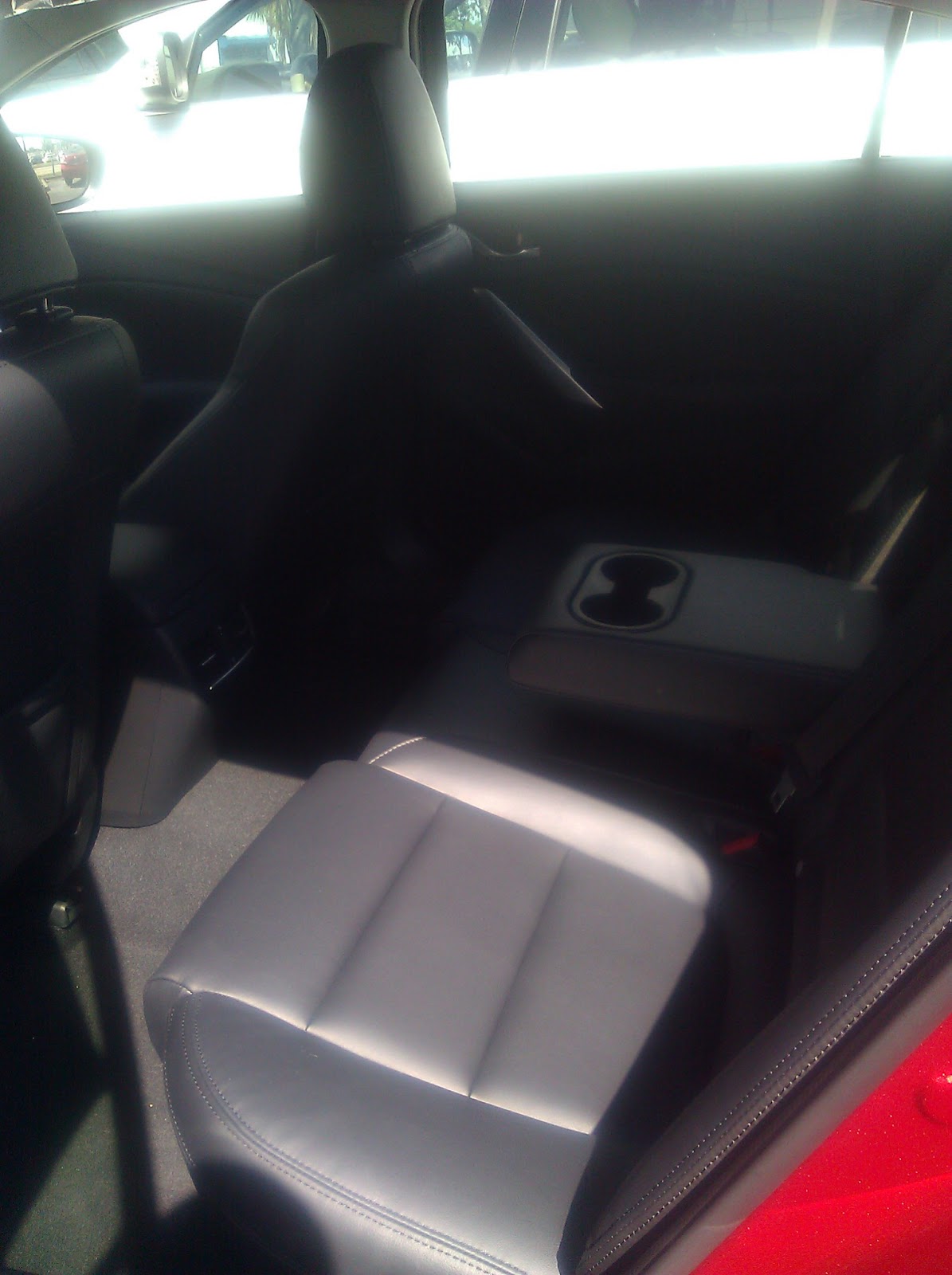
Getting inside, the interior features higher grade materials and great build quality. Compared to other sedans in the segment, the 2014 Mazda 6 dash appears simple and not as stylish (especially compared to the exterior) but the upside here is that all the controls are easy to reach and have a no-nonsense logic to manipulation (a great example being the three large knobs for the climate control system). The steering wheel is thick-rimmed and features EPAS (Electronic Power Assist Steering). Despite this there's no sense of vagueness, although just off center steering feel is a tad numb. The large gauges are legible and features a small display between the speedometer and tachometer for reference to vehicle information such as fuel mileage, range, radio info and maintenance logs. The cabin is quite roomy with rear seat space good for someone of my height (just under 6ft). Both cockpits of the older and newer 6 models share a common simplistic theme to the controls and driver-seating positions. Outfitted with leather, and high quality materials, you'd be fooled into thinking the 2014 Mazda 6 was a luxury vehicle at a glance. Indeed, everywhere the fingers are likely to roam, the materials are soft to the touch and and don't feel cheap or chintzy when operated.
Initially, all new Mazda 6 sedans will be powered by a 2.5L SkyActiv-G (for gasoline) four cylinder engine. Featuring an aluminum block with lightweight, low friction internals, direct fuel injection, variable valve timing and a sky (no pun) high compression ratio of 13.0:1, the engine generates 184hp and 185lb-ft of torque, useful gains over the smaller 2.0L version in the CX-5 crossover (which will also get the larger mill in mid 2013). Power is routed to the front wheels through two new SkyActiv automatic or manual transmissions, both equipped with six speeds. An optional 2.2L SkyActiv-D diesel four cylinder with 178hp and 310lb-ft of torque will be available later in 2013, but don't expect a V6 option (although I was told by an insider that Mazda was secretly working on one). My tester for the day was a Touring model, the mid-grade flavor of the Mazda 6 hierarchy equipped with the six speed automatic and painted Soul Red (a $300 optional color).
Out on the road, the Mazda 6 proved quite peppy and responsive. The 2.5L engine might 'only' have 185hp, but the six speed automatic knew exactly how to dole out the power. Through a series of challenging turns, the transmission, kept the engine in its sweet spot and was quick to summon a downshift if it thought I was approaching a turn. The manual shift function was a bit slow in responding to driver calls for shifts but the transmission is so intuitive at learning one's driving style that this is a non-issue: leave it in D and let it do the shifting. The suspension was taut and firm, but remarkable in smoothing out rough patches just enough that the ride didn't seem skittish or harsh. Turn-in response was also quick and direct, the nose going exactly where it's pointed. Braking was also quite good, a quick stomp on the binders returned good feel and short stops. It's good that Mazda preserved the playfulness of the first generation Mazda 6, something that was almost absent in its larger 2008 successor. In this regard, the 2014 Mazda 6 and my 2006 model are quite similar. However, when it was time to settle down on the highway, the 2014 proved that it is leagues ahead of my car in terms of refinement. The ride was a bit more composed than my car and the cabin was much quieter, the transmission loafing the engine at around 2500rpm at under 70mph. I was able to carry on a conversation with Andres, my guide for the day, without having to elevate my voice which was quite a habit in my car. The seats were comfortable and supportive in the right areas and were multi-adjustable, also offering heated and cooled functions. The cockpit feel of my car is present and accounted for in the 2014 Mazda 6 where everything falls readily to hand.
EPA fuel economy for the 2014 Mazda 6 rates at 26 city/38 highway for the automatic model (25/37 for the manual), really good numbers for a mid-sized sedan and rivaling numbers for the Nissan's 2013 Altima. Pricing for the base model Mazda 6 Sport starts at an aggressive $20,880 when equipped with a manual transmission (only available on this model) while an extra $1615 ditches the manual for the automatic transmission. The Sport comes very well equipped with a laundry list of standard items such as variable intermittent wipers, a 6 speaker AM/FM/CD/MP3 audio system with inputs for auxiliary, iPod or USB sources, halogen daytime running lights with auto on/off headlights, tilt and telescoping steering wheel as well as push button start. Step up to the Touring model, like my tester, for $24,495 and add advanced features such as Blind Spot monitoring with Rear Cross Traffic alert, Bluetooth wireless for phone and audio-streaming, Pandora streaming and HD radio, dual zone climate control, 19" aluminum wheels (up from 17"), a 5.8" touchscreen interface with SMS text audio delivery/reply and rear seat heat with A/C vents. The luxuriously appointed Grand Touring model ups the list for $29,495 featuring Bi-Xenon headlights with LED daytime running lights, a Tom Tom navigation system with traffic alerts, a full leather interior, steering wheel mounted paddles for the automatic transmission, an upgrade 11 speaker Bose audio system with Centerpoint technology, SiriusXM satellite radio, a power moonroof and Smart City Brake, an ingenious system similar to Volvo's that automatically stops the car at slow speeds if an object are person is detected in front of the car.
If the lack of initial engine choices isn't a deal breaker, the 2014 Mazda 6 offers a very compelling and stylish alternative to the other mid-sized competitors. The sole gas engine is competitive in terms of power and efficiency and features such as a stylish exterior, roomy interior, an impressive equipment list and innovative safety touches stack up well in the segment. But if fun-to-drive is at the top of list, then Zoom Zoom is the only way to go.
Special thanks to Andres Molina and South Motors Mazda for allowing me the opportunity to test the 2014 Mazda 6. They are great people to work with and can be reached at 866-441-1733.
Labels:
2014,
Bose,
Efficient,
fun to drive,
Grand Touring,
Kodo,
light,
Mazda 6,
SkyActiv,
SkyActiv D,
SkyActiv G,
Sport Shift,
Takeri,
Tom Tom,
Touring,
Zoom Zoom
Wednesday, January 16, 2013
First Impressions - 2014 Lexus IS250/350
![]() |
| 2014 Lexus IS F Sport |
The current-generation Lexus IS has aged gracefully since its inception way back in 2006 and was among the first models to introduce the then new-L-Finesse design theme. With compact proportions, rear wheel drive and a duo of V6 engines ranging from 2.5L to 3.5L, the IS presented a more focused attack on the luxury sports compact segment reigned over by the BMW 3 Series. This generation IS also brought with it the introduction of the first in-house performance model branded as the IS F which brandished a hotter variant of the corporate 4.6L V8 found in the full sized LS sedan, stroked to 5.0L and producing 416hp, revised suspension and styling and a sportier nature to challenge the M, AMG and RS vehicles of the segment. However, with this design came a cramped cabin (someone famously told me that the IS is actually a 2 door with 2 extra kiddie-doors grafted on), a somewhat harsh ride and a cheapish interior that hasn't followed the exterior in aging well.
![]() |
| 2014 Lexus IS F Sport |
Enter the 2014 Lexus IS which aims for a bigger slice of the luxury sports compact segment. Gone is the almost anonymous face and rounded styling in favor of sharper creases, edgier styling and the implementation of the corporate Lexus spindle-grille face that is proliferating throughout the lineup.Styling cues from the now out-of-production LFA super car are evident in the long, low hood and headlights. The spindle grille is perhaps the most dominant feature of the redesign which is proliferating through other Lexus models. In a word, the grille is HUGE, with the pinched section almost jutting forward like an angry mouth about to swallow prey. Flanked by twin flared air intakes on either side (and an extra pair on the F Sport), the grille is at once aggressive and polarizing. The brand's signature arrowhead LED running lights that were integral with the headlights on other models now have their own housings just below the twin xenon jagged-shaped headlamps which, along with the low flat hood, are LFA-like in there appearance.The rest of the body appears ho-hum and slab sided until just before the rear door cut line where an up-kink in the rear quarter window adds a bit of drama. The side sills get a twist towards the rear and a character line trails from there to meet the stretched tail lights. Sitting on a longer wheelbase, the new IS projects a lower and wider stance than its predecessor. The rear view is also subtly redesigned where the tail lights slim towards the center and a diffuser sits below with twin exhaust pipes peeking underneath. As whole, the exterior is more dramatic and a styling gamble for the once-sedate Lexus.
![]() |
| 2014 Lexus IS F Sport Interior |
Inside, more LFA touches abound in the center console and steering wheel. Thanks to the longer wheelbase (now about Audi A4-sized) and touch more width, indoor occupants should have more room to move with rear seat passengers benefiting the most with more legroom. The digital "driver meter" is an almost direct lift from the LFA, while electrostatic surfaces now control the climate system. The navigation has been substantially revised to allow 3D visuals and will now feature the Lexus Enform infotainment system. The dashboard is now more driver centric and is lined with higher quality, soft touch materials. The seats are thinner in design and are positioned a tad lower to improve comfort for the driver and front passenger.
![]() |
| 2014 Lexus IS F Sport |
On the engineering front, the 2.5L and 3.5L V6 powerplants return for the 2014 model with similar power figures of 204hp and 306hp respectively, although the manual transmission for the IS250 has been dropped. The IS350 however, gains the eight speed, paddle shift automatic, lifted from the IS-F which should provide for sprightlier performance in sporty driving conditions. A main focus for Lexus was for the IS to be the sportiest sedan in its class (a direct command from Toyota CEO Akio Toyoda) so to that end, every facet of the IS was looked at. In addition to the new gearbox, the electronically boosted steering was lifted from the larger GS sedan and enhanced for more steering feel. Also poached from the GS was its multilink, rear suspension, modified for IS duty and fitted with the Adaptive Variable Suspension that adjusts damping along five driver selected programs: Snow, Eco, Normal, Sport and Sport+. The body-in-white was also stiffened using additional spot welds along major junction points to improve rigidity. For the first time, all wheel drive will also be offered and made available regardless of engine choice.
![]() |
| 2014 Lexus IS F Sport |
Three models will be offered when the IS goes on sale later this year: IS250, IS350 and IS350 F Sport. Prices shouldn't budge much from the outgoing IS and remain in the ballpark of other competitors.If the exterior is any indication, you can expect Lexus to be hotter under the collar as it seeks a new dynamic path. No longer is this the relentless/passionate pursuit of perfection. With the new IS and recently introduced GS and LS, Lexus is now in hot pursuit of sportiness.
Images courtesy of Lexus
Tuesday, January 15, 2013
First Impressions - 2014 Chevrolet Corvette
![]() |
| 2014 Chevrolet Corvette Stingray |
Corvette loyalists might have been gawking when the wraps were pulled off the seventh generation (C7) Chevrolet Corvette this week at the 2014 North American International Auto Show. Whether those were gawks of horror or gawks of adoration is something else entirely.
After weeks of teasing, spy shots and leaked material, the C7 Corvette has finally seen the proper light of day and at first glance, it is quite a striking thing to behold. It might not be the drop-dead gorgeous lines of the 2009 Corvette Stingray Concept, it might not have a mid-engined pose but the proportions all read engine at the front, RWD at the back. In other words, this is still a Corvette in the classic sense.
![]() |
| 2014 Chevrolet Corvette |
Instead of launching one model and then complimenting it with variants later in the product cycle, Chevy has introduced two distinct flavors of the C7. The base model (if you can call it that) is the Corvette Stingray and though that name may invoke images of the 2009 concept (or the 1957 Stingray for you older readers), almost nothing is carried over from those cars. In comparison to the out-going C6, the new Corvette strikes a lean, almost futuristic and aggressive stance. Where the C6 was smooth and rounded at the corners, the C7 is creased, angular and sprinkled with vents all around (and all of them functional so says Chevy). The front now features a single piece air intake and the headlights are now more vertically oriented. The hood, now made of carbon fiber along with the roof panels, also features a heat-extracting vent that reduces front end lift while offering more efficient cooling for the engine. The greenhouse now features rear-quarter windows, something not seen on a Corvette since the C3 generation. Along with the blacked out A pillars, this gives the Corvette an almost Nissan GT-R look in some views, particularly the rear 3/4 view. That's not a bad thing, particularly when the engineering that necessitated such a styling feature is revealed.
![]() |
| One of the rear fender mounted vents - trick racing technology here |
In a classic case of trickle-down technology, Chevy looked to its C6.R ALMS racing cars to improve the C7. Atop both rear fenders are intakes that feed fresh air to radiators for the transmission and differential.. These bookend the new flat rear glass and replaces the wraparound rear window of the C5/C6 versions. Perhaps the most controversial aspect of the new C7's styling is the treatment of the tail lights. For decades, the four round elements have been a Corvette hallmark (right up there with pop up headlights) and for the C7, they have been restyled in a way that mimic those on the Camaro. Instead of being round, they are tightly packed into an angular cluster and have more styling depth and detail to their housings. The housings themselves also feature small vents at their outer extremities that serve to vent hot air away from those same transmission/differential radiators. The exhaust pipes are now arranged neatly in a single row in the center above a defined air diffuser. In profile, this is still a Corvette in overall stance but the styling is visually a lot more interesting than the C6 and more aerodynamic in nature.
![]() |
| Perhaps the most controversial styling aspect are the tail lights, but they look great |
The C7 Corvette aims to fix the niggling faults of the C6. One main complaint from owners (and the auto media) was a lack of steering feel. Chevy addressed this by bolting the steering rack directly to the front cradle and tightening up the front end, yielding a massive increase in rigidity. Every Corvette will now ride atop an aluminum frame in order to save weight, a page taken out of the ZO6/ZR1 playbook. By itself, weight savings technologies such as making the suspension mounting points aluminum keeping the reinforced plastic body panels yielded about a 100lb saving over the outgoing C6. Electronic steering replaces the hydraulic unit in the C6 and though these systems have never been a favorite of enthusiast drives due to their 'video game' like operation, Chevy worked hard to retain as much steering feel as possible.
![]() |
| 2014 Corvette Interior - finally looks world class |
Another sore point in the C6, and one I've personally experienced, is the interior. I've sat in quite a few Corvette cabins and every single time I found myself wondering why the interior didn't match the price tag. Even a lowly Chevy Sonic would turn up its nose at such low rent materials and quality. Chevy has finally addressed this eye sore by making the cabin both functional and luxuriously appointed. The steering wheel, which looked like every other wheel in the Chevy stable, is now uniquely Corvette and smaller in diameter. Craftsmanship quality and the materials now look to be first rate. The dash features stitched leather and is canted towards the driver for a more focused look and soft-touch materials are sprinkled liberally throughout the cabin. The uncomfortable and woefully inadequate seats of the C6 have been banished in favor of thrones that finally live up to the Corvette's mission as a sports car. Two seat options are available: GT and Competition Sport. Both offer support and comfort (including heated and cooled modes) that are decades ahead of anything the C6 offered (and hopefully that horrible plastic smell has been eradicated from the interior). The leather looks great and the central touchscreen interface looks as if it has finally been brought into the 21st century with vibrant graphics and detailing.
![]() |
| 6.2L LT1 V8 - 450+hp/450+lb-ft of torque |
You can't talk about a Corvette without talking about the engine so here goes. Twin turbo V6? Nope. Chevy opted to stick with the Corvette's tried and true pushrod, small block V8, here still displacing 6.2 liters. While it's based on the LS series, enough of it has been either redesigned or revised to demand a new code name: LT1. Sounds familiar? It should but it's not to be confused with the LT-1 designation of engines that powered C4 Corvettes and various F-body Camaros and Firebirds. This is a whole different beast that employs the latest in power generating and fuel saving technologies in Chevy's arsenal. Direct fuel injection, continuously variable valve timing and redesigned combustion chambers help the LT1 to pump out preliminary figures of 450hp and 450lb-ft of torque. While this represents an incremental increase over the LS3, Chevy boasts that torque delivery is similar to the bigger ZO6-equipped LS7 7.0L V8 in that, between 1000-4000rpm, the engine is already generating over 400lb-ft of torque. Cylinder deactivation is also standard on all C7s, manual transmission cars included (a first in the industry). Together, these bump up fuel efficiency by as much as 20% when coupled with either the revised 6L80 six speed automatic (equipped with paddle shifters and rev matched downshifts) or the new Tremec seven speed manual (that's right, SEVEN speeds). The manual is identical to the one offered on the old C6 with the exception of the new seventh gear being an ultra-tall and long ratio in a nod to increase fuel efficiency. Remember the Corvette was one of the few lauded performance cars (the ZO6 especially) for being reasonable on fuel.
![]() |
| Top down, the flowing lines point the massive aerodynamic work done to the body |
As was mentioned before, two C7 models will be offered at launch: the Corvette Stingray and the more performance-oriented and more aggressively-styled Z51. While the Stingray features a stiffer suspension with standard Bilstein shocks all around, the Z51 is equipped with the third generation of Chevy's superb Magnetic Ride damper system as well as upsized brakes, wheels and tires (now Michelin Sport Cups instead of the longstanding GoodYear Eagles). The Z51 also sports an electronically controlled mechanical limited slip differential that is capable of apportioning torque between the drive wheels, thereby cutting understeer and enabling a more neutral poise. All C7s will come equipped with a Drive Model Select system operated by a rotary knob on the console. Five distinct modes are available to the driver: Tour, Sport, Track, Wet and Eco and they affect various vehicle parameters such as steering heft, throttle response, damper settings (Z51), cylinder deactivation, exhaust note and traction/stability intervention points. What's more, the driver is able to mix and match all of these settings into various programmable modes that are available at any time.
![]() |
| The Stingray is back |
Pricing hasn't been announced as of yet but chances are if you were in the market for the previous C6 (or the rival Porsche 911), the C7's ultimate price shouldn't be a bother. One of the Corvette's core philosophies involves providing world class sports car performance that the everyday worker can afford. Let's not forget that the ZR1, even in the sunset of its existence, was still trouncing exotic performance cars two, or even three, times its price and this was due to the C6 being a fabulous starting point.With the new C7 Corvette, Chevy has fixed the flaws of its predecessor while sharpening the claws that make the Corvette driving experience one to remember. Sure the C7 might not have gone the exotic mid-engined route (maybe the C8 or C9?) but the new 2014 Corvette is enough of a comprehensive redesign that will give the European competition nightly sweats.
Images courtesy of Chevrolet and EGM Car Tech
Wednesday, December 19, 2012
Lincoln: Dead or Alive?
Oh Lincoln...
My how you've lost your way. I fear you'll suffer the same fate as your Mercury brother did a few years ago when old mother Ford had to choose which of you she was going to take a shotgun to behind the house. Back then, the two of you seemed like fair game as your products were startlingly similar to Ford's own blood children. The long-in-the-tooth Navigator? The SUV that, ironically, gave birth to Cadillac's own selling-like-hotcakes Escalade? Oh, just a chromey version of the Ford Expedition. The MKS? Just a Taurus with a toothy grin. The MKZ? A rebadged Fusion (which also did duty as a Mercury Milan for a while) with a chrome schnoz. The only bright spark that you could point to was the Town Car, a vehicle built on a chassis so old that it even predates me by a number of years. A bright spark only because it gave the livery industry the right car for shuttling executives, dignitaries and countless hordes of high school prom queens to their respective events. When you decided to axe this car, the car that was synonymous with luxury, and replace it with that baleen whale of a crossover called the MKT, the Town Car had probably its best sales year ever as scores of your livery customers (and by extension, the police force who bought the similar Crown Victoria for their fleets) placed massive orders to sustain them for years. Believe me, if the livery industry sees how good a car the Town Car was (and how bad the MKT is at replacing it) you really do need to take notice.
![]() |
| Lincoln MKT |
But where did this all start though? How is it that you fell from grace? Again, we can place the blame squarely on Ford. Don't get me wrong, Ford products have come a seriously long way themselves. Faced with the real danger of extinction during the 2007-2009 recession years, Ford finally saw how lacking its products were and, quite literally, bet everything it had on a full scale revamp across its entire brand. Suddenly we have the return of the Fiesta, a sub compact with astonishingly good looks and a fun-to-drive nature that rivals the standard of the class, the Honda Fit. Then there was the Taurus (which for years was called the Five Hundred. Really?) which, although based on old Volvo bones, was easy riding, large and boasted a high quality interior as well as impressively good looks. This also marked the return of the hallowed SHO version of the Taurus. I mean seriously, Ford was on a roll. Mercury however? Nope, not enough engineering resources to sustain Ford plus Lincoln so after shedding its stupid Premier Automotive Group (Jaguar, Land Rover, Aston Martin) it decided that Lincoln would remain to compete with the rising star that was Cadillac. To reinforce this, Ford let loose the outstanding MKR concept, a drop dead gorgeous concept of a car based on the RWD bones of the Mustang. Here, everyone though, was a true challenger to the premium marques. Here, I thought, was a great-looking replacement for the Lincoln LS, a car that was so left field for the brand that it hinted at Ford actually having a direction in place. You could almost hear the American population screaming "build it! build it! build it!". And build it they did, but in a cruel twist that seemed to slap the automotive media (as well as the young buyer Lincoln was hoping to lure) in the face, Ford built the car on the Taurus FWD/AWD chassis and made the proportions bulbous and porky. You can imagine folks at Cadillac laughing their collective asses off.
![]() |
| 2003 Lincoln LS |
![]() |
| Lincoln MKR Concept |
![]() |
| Lincoln MKS |
To make matters worse, Ford took the same architecture that formed the basis for its Flex crossover (again, based loosely on the Taurus platform) and reworked it to produce the hideous MKT, a crossover/hearse thingy they claimed would compete head on with the likes of the Audi Q7, BMW X5 and Mercedes GL. It seemed with every misstep, the Lincoln brand was losing more and more precious ground and customers. The fundamental problem Ford has is that no matter how differently it tries to differentiate Lincoln products from its own mainstream portfolio, the underlying chassis will always give it away. Take a look:
Ford Fusion - Lincoln MKZ
Ford Taurus - Lincoln MKS
Ford Edge - Lincoln MKX
Ford Flex/Explorer - Lincoln MKT
Ford Expedition - Lincoln Navigator
All perfectly nice riding vehicles with great interiors but it begs the question: is the price premium Lincoln charges over the Ford equivalent worth it? This leads to the next problem: Ford's mainstream products are becoming so good that they're starting to eat into Lincoln's slice of the market. As an example, a 2013 Ford Fusion with every available option can retail for as high as $36000. This is where its new MKZ brother starts off and, with options not available on the Fusion (fancy dampers, gi-normous panoramic sunroof and a 3.7L V6) can sticker for well over $50k. Now for that price, are you really getting a $50k experience? This high price point is Audi/BMW/Mercedes/Lexus territory and here is where the comparisons start. Is the interior as premium as Audi? Does the technology rival that of the BMW? Are the features and driving experience as good as that Mercedes? Lincoln's track record proves otherwise. Ford is trying to be to Lincoln, in essence, what Toyota is to Lexus. Didn't know that for a long time the Lexus ES300/350 was just a dolled up Camry did you? Or that the RX350 was a Highlander in disguise? The same is true of the Taurus/MKS twins. When you can have a Taurus SHO for over $50k, why would you spend an additional $5k on a MKS when you're not going to feel $5k richer? Lexus solves this problem by making its products feel premium. Step out of a Camry and into an ES350 and you instantly feel richer. The driving experience might be somewhat similar, but the material and parts quality do not lie. Is it no wonder that the ES and RX are two of Lexus' best selling products. It also doesn't hurt that Lexus' first ever vehicle was the vaunted LS400, a car that was so good at the time that it send Mercedes back to the drawing board.
![]() |
| 2013 Lincoln MKZ |
Lincoln is currently at a crossroads. The 2013 MKZ needs to be the automotive equivalent of a slam dunk if the Lincoln brand is to survive. Ford claims they've thrown everything it can at the MKZ to differentiate it from the Fusion; a difficult task when the Fusion is already such a striking car, both to look at and to drive.At first glance, the MKZ is markedly different with an almost futuristic design that is in a wholly different class than the Fusion. A good start but the market will be the ultimate test. If the MKZ does well, then Lincoln needs to build on that success with products that can legitimately compete with the standards of that class. How about a RWD platform with which Lincoln can then build its products around moving forward? Ford will be introducing a new Mustang on a lighter RWD platform in about a year and, if they want to spread costs around, Lincoln can take advantage by using it to enhance its premium message. The old LS was a great car that suffered due to misdirection and a lack of steady progression. Ford has the ability and the resources necessary to make Lincoln into a world class brand. If its mainstream products can mount such an assault on their individual segments, there's absolutely no reason Lincoln can't do the same. But with a fully loaded Fusion being just a few mediocre options away from the MKZ (the Fusion's European brother Mondeo can be optioned with these MKZ-exclusives), the questions start being asked: is there really more substance beneath the skin of Lincoln's products? With Ford's mainstream products starting to become more premium with features and design, is it just a matter of time before Lincoln becomes just another money pit and suffers the same fate that befell Mercury?
Mother Ford, if you want your son Lincoln to be his best, give him the tools to compete with the best. Cadillac's long and successful renaissance didn't come about because General Motors gave it a Malibu to re-badge. Cadillac's mom gave it a dedicated RWD chassis to call its own and, through this tool, Cadillac gained a distinctive personality and image that centered around sportiness as well as luxury. One with which it has given those snooty classmates BMW and Mercedes a collective run for their money. No longer was Cadillac seen as the Palm Beach geezer-mobile of choice for retirees. It now has a more youthful appeal and products that compete on every level with the established blue bloods of the luxury market, leaving Lincoln in its dust. Just look around: the only Nissan sharing the FM platform with Infiniti is the 370Z. Lexus? Every car they make is RWD save the aforementioned ES/RX/CT and you won't see that platform with a Toyota badge. Shouldn't Lincoln receive the same opportunity? Give it its own chassis, mother Ford. You have an Australian arm that specializes in RWD architecture to draw from and a vast European arm to handle the luxury appointments, not to mention a deep well of technology that can rival anything else out there (side note: please, either fully revamp MyFord/Lincoln Touch or ditch it entirely). You've proven with the old LS that when you want to, you have the capability to do this. With steady improvements and an eye set on a fixed target, Lincoln can become a successful brand. Or you can quit doing the half-assed job you've been doing for years, take Lincoln around the back and just end it.
Images courtesy of Motor Trend , Jalopnik and Automobile Reviews.
Thursday, November 29, 2012
First Impressions - 2014 Jaguar XFR-S
![]() |
| 2014 Jaguar XFR-S |
Chances are you've never seen a Jaguar sedan that looks quite like this.
Perhaps that 510hp XFR in your four or five car garage is looking a little...tame. Jaguar has a solution in case you need more interior room than the 2-door XKR-S will allow (and you find the notion of a 510hp Range Rover Sport ridiculous). What you see here is the newest addition to the league of competitors chomping at the bit to take on the vaunted BMW M5, Jaguar's recently unveiled XFR-S. As the name suggests, the new uber-sedan gets its mojo from a hotter version of Jaguar/Land Rover's corporate supercharged 5.0L V8 that stomps out 550hp and 502lb-ft of torque channeled through a beefed up 8 speed automatic transmission with manual shifting capability. Other R-S spec hardware includes beefed up half-shafts at the rear, a sturdier crankshaft and re-calibrated suspension front and rear that was tuned (like everything else nowadays) at Germany's famed Nurburgring circuit. Lightweight 20" wheels are equipped on all four corners and are wrapped with sticky Pirelli tires. The electronic nanny systems like stability and traction control have also had some software updates to have them back off more, giving the driver increased authority over the XFR-S' newfound power. And you'll certainly hear that power through the new straighter exhaust that crackles and pops on throttle overrun. To make things even more interesting inside the cabin, Jaguar has fitted a sound symposer that pipes more engine noise directly inside. You're forgiven if you'd rather not listen to the 825 watt 18 speaker Meridian sound system.
![]() |
| 2014 Jaguar XFR-S |
Visual changes to the XFR-S make the standard XFR look pedestrian by comparison. Starting off with the French Racing Blue paint job, the body features a deep, carbon fiber splitter that juts out front and is flanked by larger intakes. The grille surround is painted black while the mesh inset is also black. Deeper side sills are fitted and perform aero work that routes air to a huge carbon fiber rear diffuser beneath the rear bumper. A choice of two rear wings is available though, personally speaking, the larger one looks a tad boy-racerish on such a sleek body (on the contrary, it does provide greater downforce if you're into that sort of thing). Inside, the upgrades are rather minimal, limited to carbon printed leather, some contrast stitching and the aforementioned Meridian sound system. While the exterior upgrades are sort of tastefully done, forget about slipping under the radar as you would in a normal XF. If the more aggressive exhaust doesn't give you away, the paint job will.
Jaguar estimates a 0-60mph time of 4.4 seconds for the XFR-S while achieving the same fuel economy as the XFR at 15 city/23 highway (buh-bye gas guzzler tax). Unfortunately, don't expect a dearth of XFR-S cars to proliferate your local Jaguar dealership as just 200 are expected to be produced, 100 of which are bound for the red, white and blue. Pricing starts at $99,000 excluding tax and destination and sales are slated to begin during summer of 2014. Make sure you're at the head of the line.
It's good to see Jaguar taking these necessary steps to be on a more or less equal footing with its German competitors. Despite the limited quantities that will be available, this hints at future R-S models becoming to Jaguar what M and AMG models are to BMW and Mercedes.Who says the good ol' days are gone?
Images courtesy of Autoblog and Autoweek.
Wednesday, November 28, 2012
Review - 2013 Chrysler 300C
![]() |
| 2013 Chrysler 300C |
"Is it the car or the road?"
"I think it's the road."
"Yeah, I figured. That Fiesta over there is jumping all over the place."
Heading south on Washington's I5 down to Bremerton and the U.S. Naval town of Kitsap, my Dad was pointing out how badly a Ford Fiesta was handling the ice-ravaged highway in the adjacent lane. While the driver was doing his best to not be skipped out of his lane by the hilariously pock-marked road imperfections, the 2013 Chrysler 300C we're driving registered the constant "thumpety thumps" as minor longitudinal hops in the suspension. Sure we noticed them but we fared far better than the occupants in the tiny, bucking Ford. Neither was tracking dead straight an issue. The steering wheel never jumped out of my hand and the ride remained somewhat relaxed. Such is the big car luxury that the 2013 Chrysler 300C affords its occupants..
![]() |
| Rear is more chiseled and sculpted |
First introduced in 2005, the 300C has been no less than a smash hit for Chrysler which, at the time, was married to Daimler-Benz in a tumultuous relationship. Riding on the large LX RWD platform (itself derived from the W211 Mercedes E-Class of 2003-2009), the 300C signaled a huge 'about-face' for a company that drove itself on large, FWD cars that were sleek and featured 'cab forward' design. In contrast, the 300 was large and blocky with a cabin that was not unlike driving a tank. Looking at one instantly evoked images of 1930s chopped-top mobster cars that gangsters such as Al Capone and Frank Costello might have driven. It was instantly a classic. Now in the hands of the Italy-based Fiat Group, Chrysler has sought to update its products and pull itself from bankruptcy after being divorced by Daimler and abused by Cerberus Capital Management Group, then saved by the U.S. Government. The new 300 was unveiled in 2011 and featuring crisper, more contoured lines while riding on a revised platform still bearing the LX codename. The cabin was subtly enlarged, sightlines were enhanced and quality was improved thanks to the high standards that Fiat's CEO, Sergio Marchionne is known for. Where the old 300 could be described as 'art-deco', the new model sports a very upscale, Armani look.
![]() |
| LED Daytime lamps offer upscale appearance |
![]() |
| LED accents on the rear brake lamps |
My tester, finished in Billet Silver Metallic, was a 2013 300C model with just over 2000 miles on the odometer. Walking up the car, it definitely exudes a cool presence, sitting low on its long 120 inch wheelbase, long hood and short deck betraying its RWD chassis. The belt line sits lower than the previous model and the windshield has a sharper rake, a nod to complaints of the last 300's poor outward visibility due to its chopped-roof appearance. This gives the 300 great exterior proportions, making look like its moving rather than sitting still. Perhaps the most changed part of the car is the schnoz. Gone are the quad element headlights and egg crate Rolls Royce-like grille, replaced by more angular HID lighting bezels, set off by C-shaped LED daytime running accent lights and a slightly smaller, trapezoidal shaped grille with lateral slats surrounded by a film of chrome sporting the winged Chrysler emblem on the top part. Three lower vents are set below the grille and headlights with fog lights placed at the corners of the outer vents. The entire front is contoured back in a nod to improve aerodynamics and improve fuel economy over the 300's blunt nosed predecessor. Around back, the rump has a subtle spoiler built in to the rear edge of the trunk lid and the tail lights are more angular and stylized. All models, whether V6 or V8, have dual exhausts the expel through oval chrome finishers. Sitting on base 18" wheels (19s and 20s are optional), the 300 sports a good upscale and purposeful stance (the DUB crowd will be pleased to know that, yes, you can still stuff 24s in those wells).
The upgrades extend inside with a much airier cabin, thanks to the lower belt line and larger glass area. The steering wheel of previous 300s (indeed most of Chrysler's cars pre-2010) always appeared truck-like and out of place to me. The new four-spoke design is much more appealing with nice surfacing and a thicker rim. The driver's binnacle boasts impressive lighting and a three dimensional look for the gauges with large speedometer and tachometer to the right and left respectively while in a row below are the fuel gauge, coolant temperature and oil pressure. Located between the speedometer and tach is a 4 inch TFT multifunction screen that, by using a small controller on the left steering wheel spoke, can call up various parameters about either the car's vitals, entertainment, trip or fuel mileage. With navigation engaged, it also displays prominent warnings regarding upcoming directional changes. It one ups other systems by actually displaying an image of what the highway exits or merges look like, I found this quite helpful in getting around the Seattle area.
![]() |
| Front seats are supple and comfortable |
![]() |
| Good space in the rear |
![]() |
| Gauges are bright and clearly legible |
![]() |
![]() |
| Phone pairing a no-brainer |
The rest of the interior was rich in its ambiance. Unlike the flat look of its predecessor, the 2013 300C has an artful look to its center console with quality dash trimming and subtle chrome accent surrounds (a dark charcoal wood finish adorned parts of the new one-piece dashboard). The console's centerpiece has to be the fantastic looking 8.4 inch LED touch screen that handles virtually all communications, climate control, navigation and entertainment functions of the car. Response time sifting through the various menis is brilliant with the use of hard drive technology (as opposed to the old DVD-based interface) and the UConnect Bluetooth voice system is easily the best of the business when it comes to handling voice commands. Pairing my phone was never an issue and the system understands a variety of voice inputs, even my Jamaican patois never seemed to faze the system. USB and AUX capability are standard as well as SiriusXM satellite radio with Travel Link and the Garmin-based navigation system (which also has SiriusXM live Traffic Link service) , while kiddie-like compared to other German or American systems, was simple and easy to operate. Whether speaking an address or typing it on screen, the system is brilliant in its execution and operation. A ParkView rear back-up camera with distance marking is also standard (a good thing since visibility out the slim rear window is still not ideal). Front and rear seat warmers (and cooling on the front thrones) are also standard (and a Godsend in Seattle's freezing climate this time of year) as well as a heated steering wheel and remote starting which quickly heats up the interior of the car. The standard 276 watt, Alpine six speaker audio system is powerful and clear (a Beats By Dre 552 watt system can be optioned as well as a 19 speaker Harman Kardon system). The seats are supremely comfortable, offering good long distance cruising comfort and good space, even in the rear for large passengers. Another cool feature are the cupholders which are illuminated and can keep beverages warm or cold.
![]() |
| Navigation is bright and easy to use |
For 2013, the 300C can be equipped with either the new 292hp Pentastar 3.6L V6 hooked an equally brand new ZF 8-speed automatic transmission or the previously standard 363hp 5.7L HEMI V8, which soldiers on with a 5 speed automatic (the 8 speed arrives for the HEMI later in the model year). Now I should state that 2013 V6 300s also sport a different electronic shifter that is T-shaped like the throttle of a luxury yacht (have a look at the shifter in an Audi A8 to see what I mean) and having taken delivery of this particular 300C, the absence of this shifter led me to believe that this was a 2012 V6 model still sporting the now ancient 5 speed. Ambling around SeaTac Airport I was quite surprised at how unusually unstrained the supposed Pentastar V6 as it pulled the big 300 around (is this really 260lb-ft of torque at work?) and how it sounded, this being a rental, I had no other immediate cues to go by (plus it was wet and I had no intention of playing with the throttle, especially loaded with family). The characteristic V8 rumble was muted from the inside and it wasn't until I took the 300C solo for an hour to take some photos that I popped the hood and was quite pleasantly greeted by the words 'HEMI' on the engine cover. Another tip to what's underhood can be taken from the driver's central display where, under light engine load conditions such as on level roads and descents, the word 'ECO' illuminates. This indicates that the V8 has deactivated four of its eight cylinders as a fuel saving measure in a system Chrysler has dubbs 'Fuel-Saver Technology'. The V6 isn't equipped with this technology and, in conjunction with the 8 speed auto, earns EPA mpg ratings of 19 city/31 highway. Pretty good for a 4000lb full sized luxury car. The HEMI also gets decent ratings of 15/23 but should improve once it chucks the 5 speed for the newer 8 cogger.
![]() |
| 5.7L HEMI V8 - 363hp/394lb-ft of torque |
![]() |
| Complete with Fuel-Saver Technology |
![]() |
| 5 speed automatic |
Around town, it's easy to be addicted to the 394lb-ft of torque that's just a throttle press away. Prod the gas pedal enough and the tires can easily break free, even more so now on Seattle's wet roads. Traction and stability control are there to save the unruly driver from any childish antics but it can be disabled just enough to allow the kid in him to play a bit. Out on the highway when merging and all eight cylinders are on full boil, the HEMI pulls like a diesel. Unrelenting in its build up of speed, it is only then, in the upper reaches of the rpm range that the full roar of the engine invades the relative quiet of the cabin. The 5 speed allows the driver to manually swap gears using Chrysler's AutoStick feature. With the shifter in D, all the driver does is slap the stick left for upshifts, right for downshifts. I found it somewhat useful negotiating Washington's mountainous roads but the response to my commands were slow and dimwitted so it 90% of its time was spent in full automatic mode. On a particularly curvy, two lane section of road just outside Gig Harbor, I was behind a late model Toyota Avalon that was moving at a pretty good clip. Despite the driver's best efforts, he couldn't get away from the big Chrysler, even where the 300's burly power might have been an issue on the wet and slick surface. The fully independent suspension handled the 300's size superbly and, as big as it is, it drives like a much smaller car in the twisty stuff. Body lean was muted and the German roots of the chassis are apparent in the 300's no-brainer attitude when hustling along. The tuning of the electrically powered assist steering (EPAS) is also a positive note as the amount of heft and assist strike a good balance though, like most of these systems, feel and communication are notably absent. Large vented brakes at all four corners can haul the beast down with authority and were constantly exercised on a particularly grueling downhill section. Never once did the brake pedal go soft (and the car was pretty loaded). This may be a big car, almost Crown Victoria sized, but it's no slouch when the highway ends and country roads beckon. A buffalo in dancing shoes...go figure.
Base price for a 2013 Chrysler 300 with the Pentastar V6 is around $30000 while the base 300C stickers for $35490. Those thirsting for more power can chuck the V6 for the HEMI for an additional $2200 (though as for right now, the 5 speed will have to do) like our tester. The few power junkies can skip the 300C altogether in favor of the 470hp 300 SRT-8 for $48995. Chrysler has done a very effective job with recreating the 300 and it shows in the level of attention to detail paid to virtually every surface of the car. Having shed the feel of a 1950's chopped-top, mobster-ride look, the 300 now evokes a rich, upscale ambiance that perfectly fits Chrysler's aspirations as an upscale brand. On a wider note, it also shows that America can build a car that is every bit as opulent and luxurious as the import brands. Having survived a tumultuous decade, Chrysler is finally on the right path to relevance and with notable products like the Jeep Grand Cherokee already winning awards for quality and this latest 300, the future can only get brighter.
Imported from Detroit has never sounder cooler.
Special thanks to the good folks at Enterprise at SeaTac Airport for helping to facilitate this review.
Subscribe to:
Comments (Atom)